



Dambadeniya Kingdom & Palace Complex: Complete 2026 Heritage Guide
Dambadeniya Kingdom & Palace Complex: Complete 2026 Heritage Guide
Explore Dambadeniya Raja Maliga Gala, Sri Wijayasundararama Raja Maha Viharaya and the story of a strategic 13th-century capital that protected Sri Lanka's royal and Buddhist traditions.
The Dambadeniya Kingdom and Palace Complex is one of Sri Lanka's most rewarding lesser-visited medieval heritage sites. Set in the Kurunegala District of the North Western Province, Dambadeniya became a royal capital during the turbulent 13th century, when political power shifted away from Polonnaruwa. Today, travellers can combine the rocky royal citadel known as Dambadeniya Raja Maliga Gala with the nearby Sri Wijayasundararama Raja Maha Viharaya, creating a compact heritage experience that connects kingship, Buddhist history, fortification, literature and rural Sri Lanka. Unlike the island's busiest monuments, Dambadeniya still feels quiet enough to explore slowly and understand the landscape that shaped the kingdom.
Why Visit the Dambadeniya Kingdom and Palace Complex?
Dambadeniya tells a different story from monumental Anuradhapura, Polonnaruwa or Sigiriya. Its importance comes from a period of transition. Sri Lanka needed a defensible political centre, a place where royal authority could survive and Buddhist institutions could continue during instability. The rocky height above Dambadeniya offered natural protection, while the surrounding settlement became an administrative, religious and cultural centre.
The Central Cultural Fund describes Dambadeniya as a medieval capital of strategic importance and dates its role as capital broadly from 1220 to 1272 CE. It identifies King Vijayabahu III as the ruler who established the capital and notes the surviving archaeological remains of the palace complex, defensive structures and religious monuments.
Dambadeniya at a Glance
Historic period: 13th century · Province: North Western Province · District: Kurunegala · Main heritage areas: Raja Maliga Gala and Sri Wijayasundararama Raja Maha Viharaya · Best for: history, archaeology, Buddhist heritage, photography and travellers seeking places beyond the standard tourist circuit.
For official heritage background, see the Central Cultural Fund's Dambadeniya heritage page.
Dambadeniya Kingdom History: Why the Capital Moved Here
The rise of Dambadeniya followed one of the great political disruptions of medieval Sri Lanka. After the decline of Polonnaruwa and the upheavals associated with Kalinga Magha's invasion, royal power shifted toward more defensible areas. Dambadeniya's rocky landscape offered a practical answer: a fortified high point overlooking the surrounding plains, with room for a royal centre below and on the summit.
King Vijayabahu III is associated with establishing Dambadeniya as the capital and restoring political and religious institutions. His son, Parakramabahu II, presided over the kingdom's most celebrated phase. The Dambadeniya period is remembered not only for defence and kingship but also for Buddhist scholarship and Sinhala literary culture.
A Defensive Royal Centre
Dambadeniya emerged as a strategic capital during instability. Its rock outcrop provided natural defence while the kingdom worked to restore royal administration and Buddhist institutions.
A Cultural High Point
The kingdom became closely associated with literary and religious activity. Parakramabahu II is remembered as a learned ruler as well as a monarch.
The capital did not remain at Dambadeniya permanently. By the early 1270s royal power shifted to Yapahuwa, another fortified rock-centred capital. This sequence—Polonnaruwa, Dambadeniya, Yapahuwa and later capitals—helps visitors understand why medieval Sri Lankan kings repeatedly selected naturally defensible landscapes.
Dambadeniya Raja Maliga Gala: The Hilltop Royal Fortress
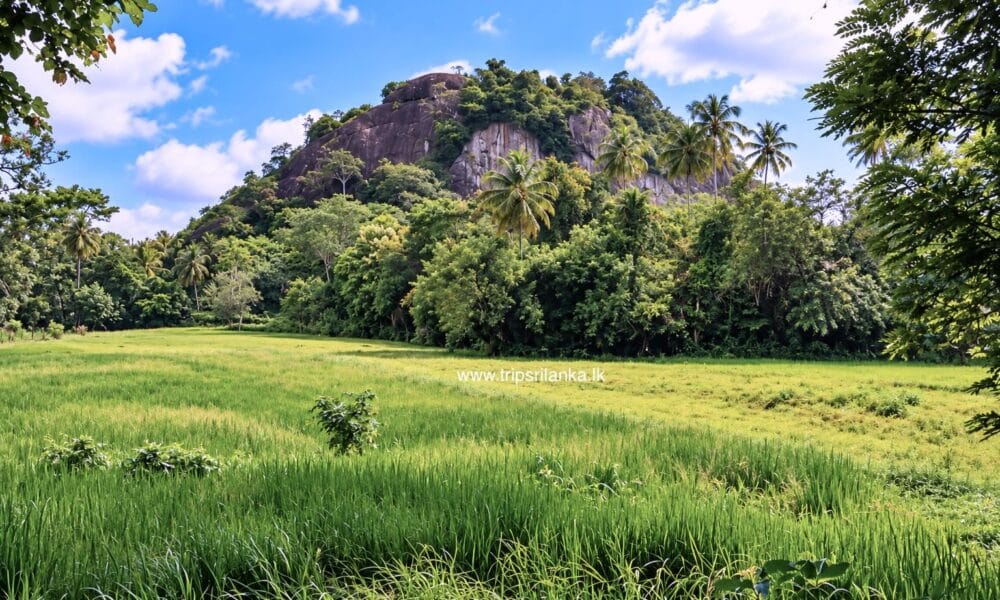
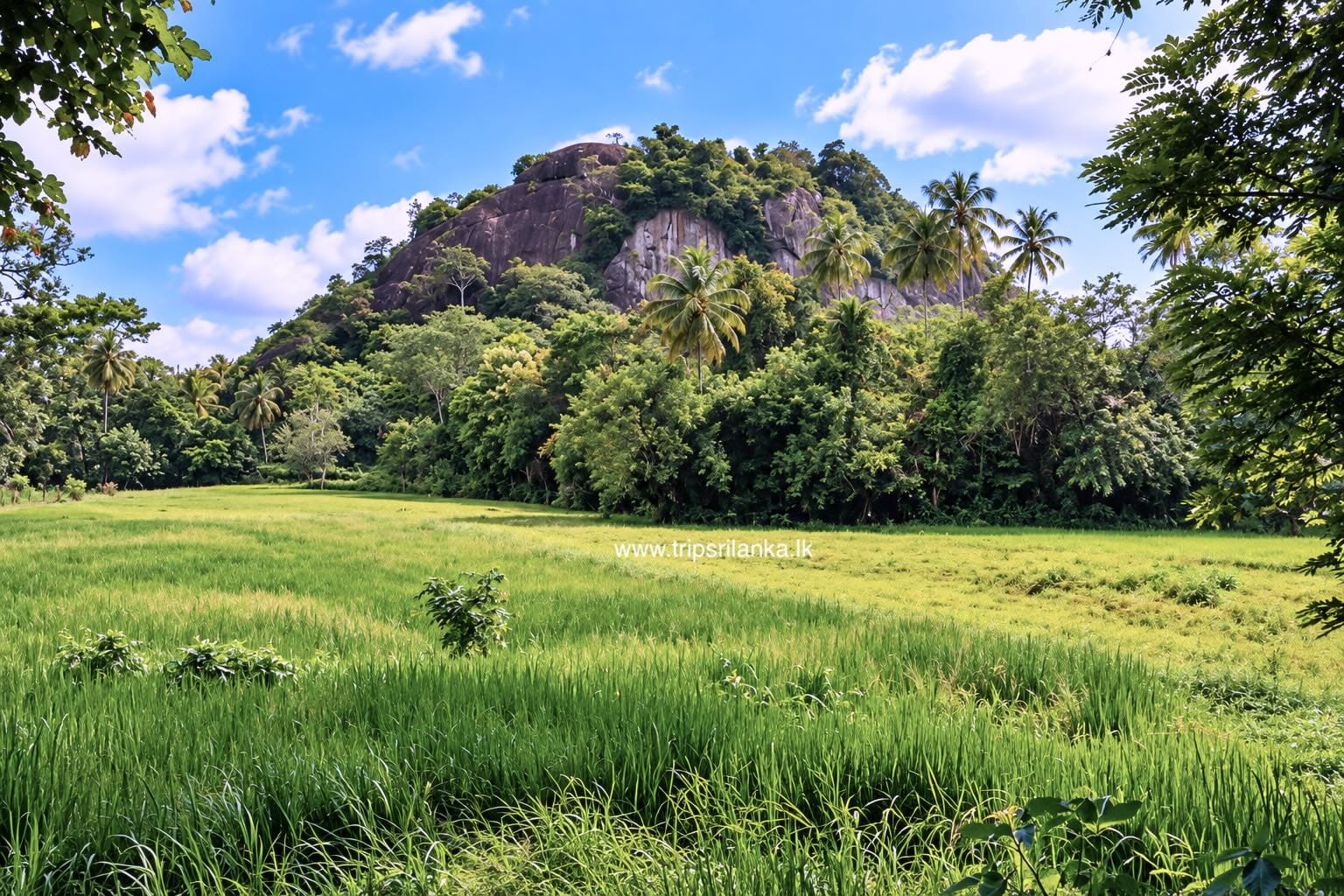
The most dramatic part of the site is Dambadeniya Raja Maliga Gala, literally associated with the royal palace rock. The granite outcrop rises prominently above the surrounding countryside. The Central Cultural Fund describes the palace remains as being positioned on a rock formation rising roughly 500 feet above the plains, giving the rulers a commanding view and a natural defensive advantage.
The climb is not simply about reaching a viewpoint. As you move upward, the landscape itself explains the strategic logic of the capital. A high citadel could observe approaches across the surrounding terrain, while walls, guarded access and other defences strengthened the natural barrier created by the rock.
What Can You See on Raja Maliga Gala?
The surviving remains are archaeological rather than a reconstructed palace. Visitors should expect foundations, traces of structures and the physical footprint of a fortified royal centre rather than intact medieval buildings. Official heritage information identifies remains associated with the royal palace complex, audience areas, guard houses, defensive walls, inscriptions and religious structures.
- Royal palace foundations that indicate the summit's former administrative importance.
- Defensive remains that reveal how the rock was incorporated into the fortified capital.
- Water-management features associated with sustaining activity on the elevated site.
- Religious archaeology reflecting the close relationship between Buddhist institutions and royal authority.
- Wide rural views that make the strategic value of the location immediately understandable.
The Rock Is a Heritage Site, Not an Adventure Park
Wear shoes with good grip, avoid climbing unstable masonry or archaeological remains, and be especially careful after rain. Do not move stones, scratch surfaces or enter restricted areas for photographs.
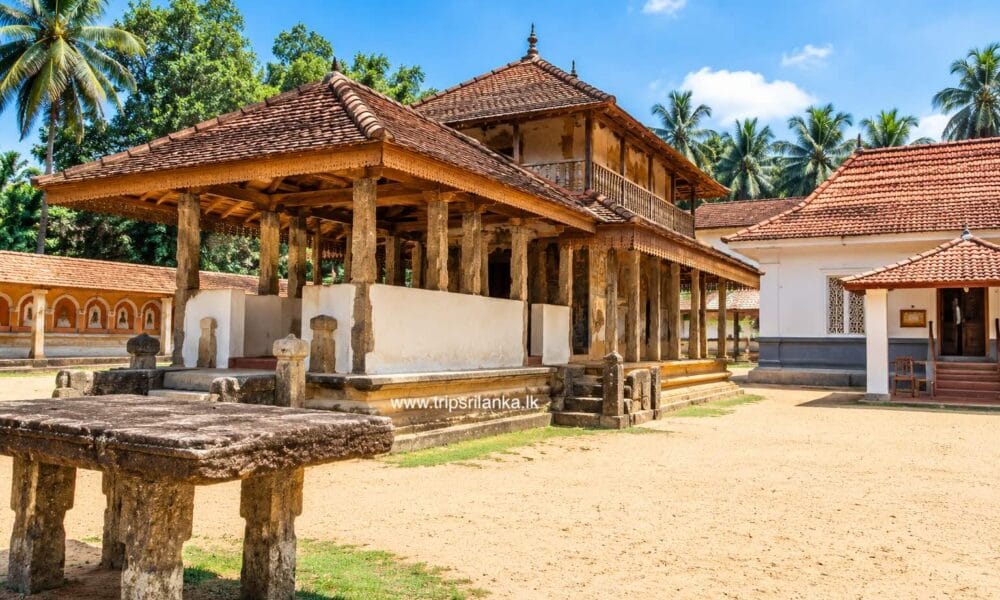
Sri Wijayasundararama Raja Maha Viharaya, Dambadeniya
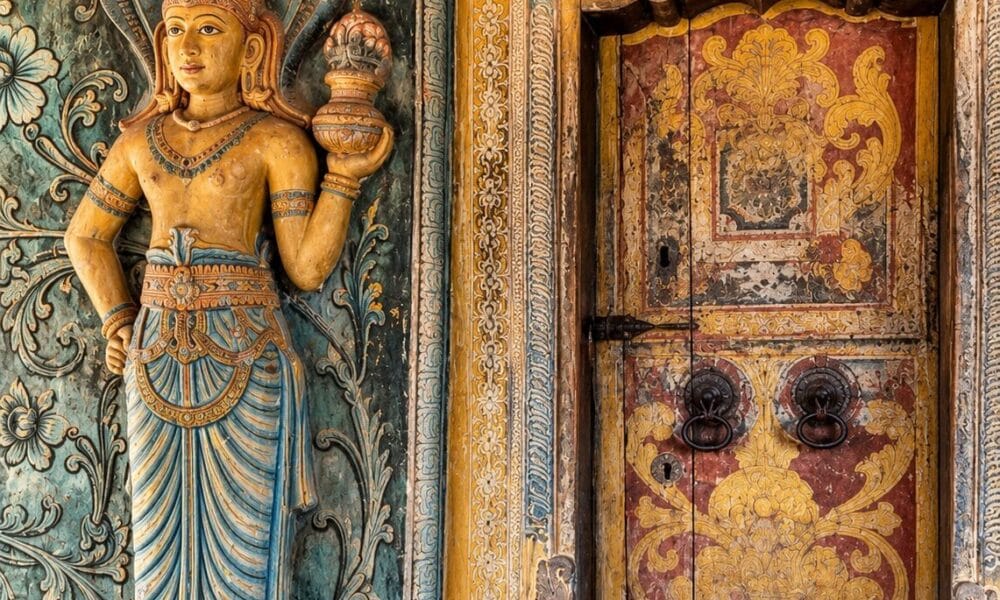
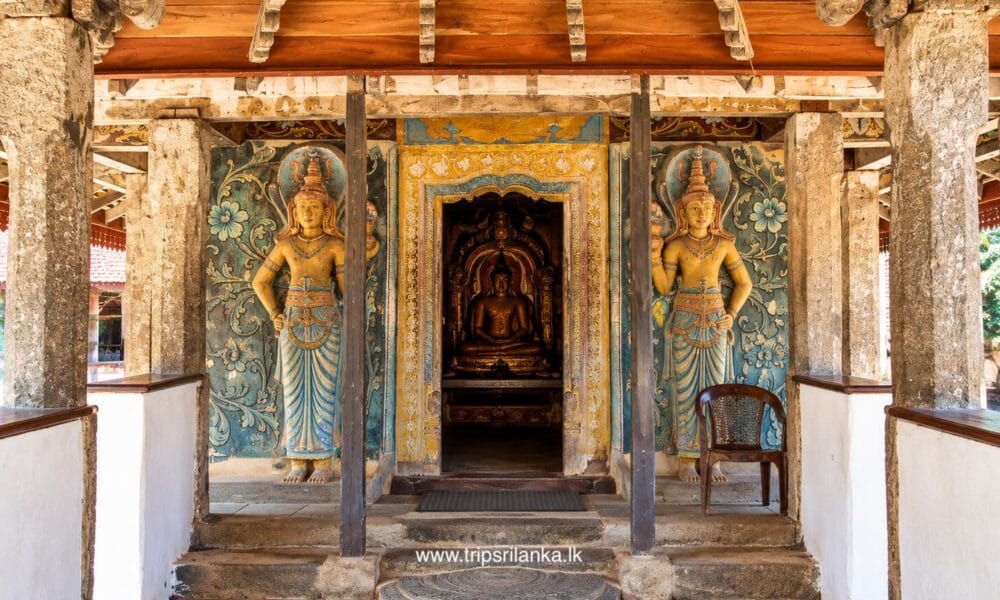
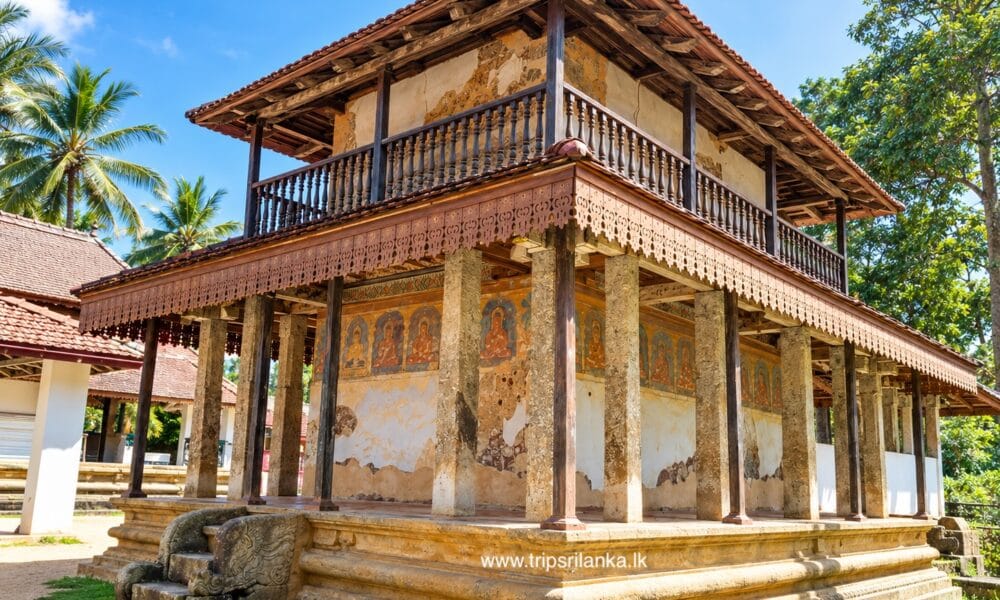
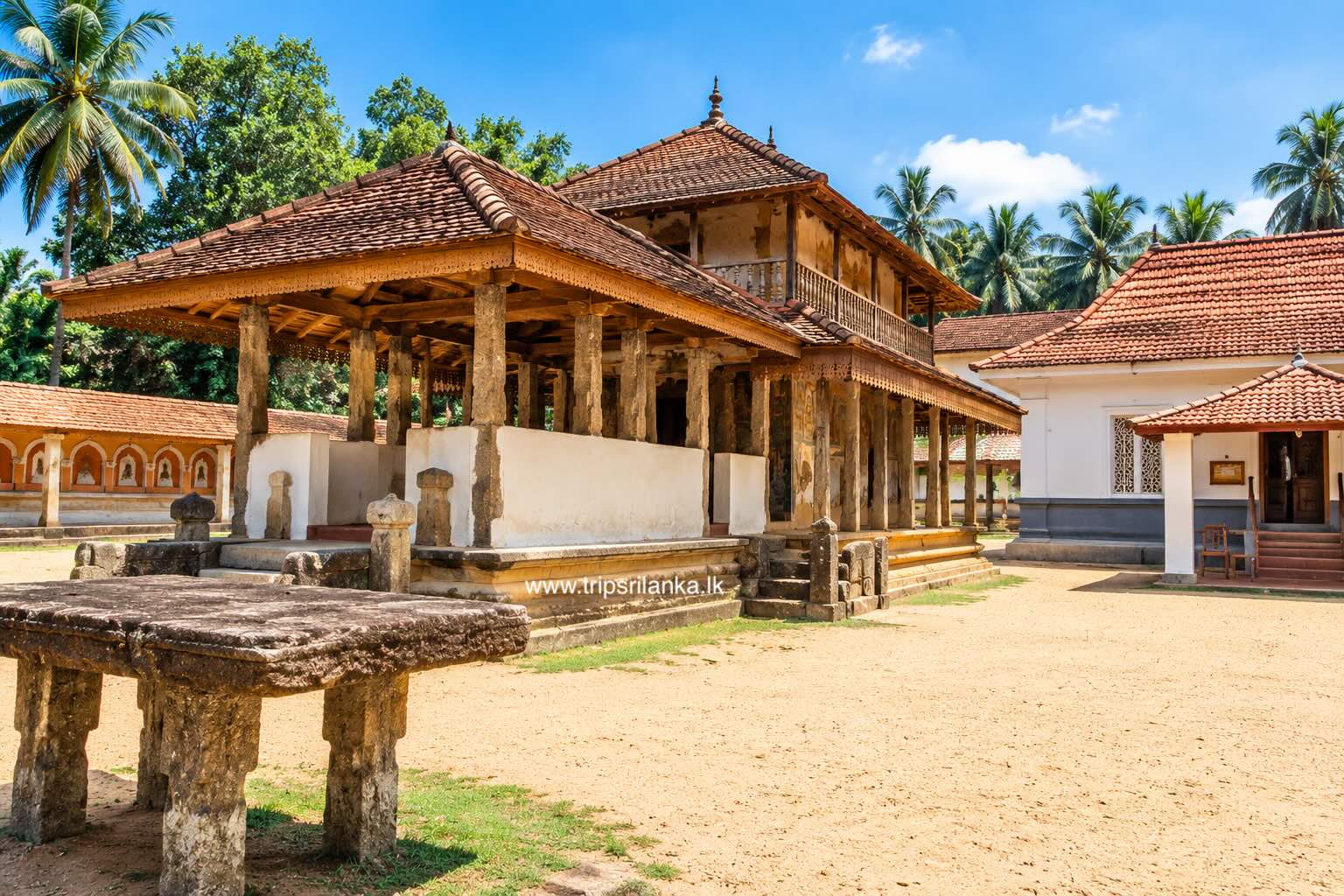
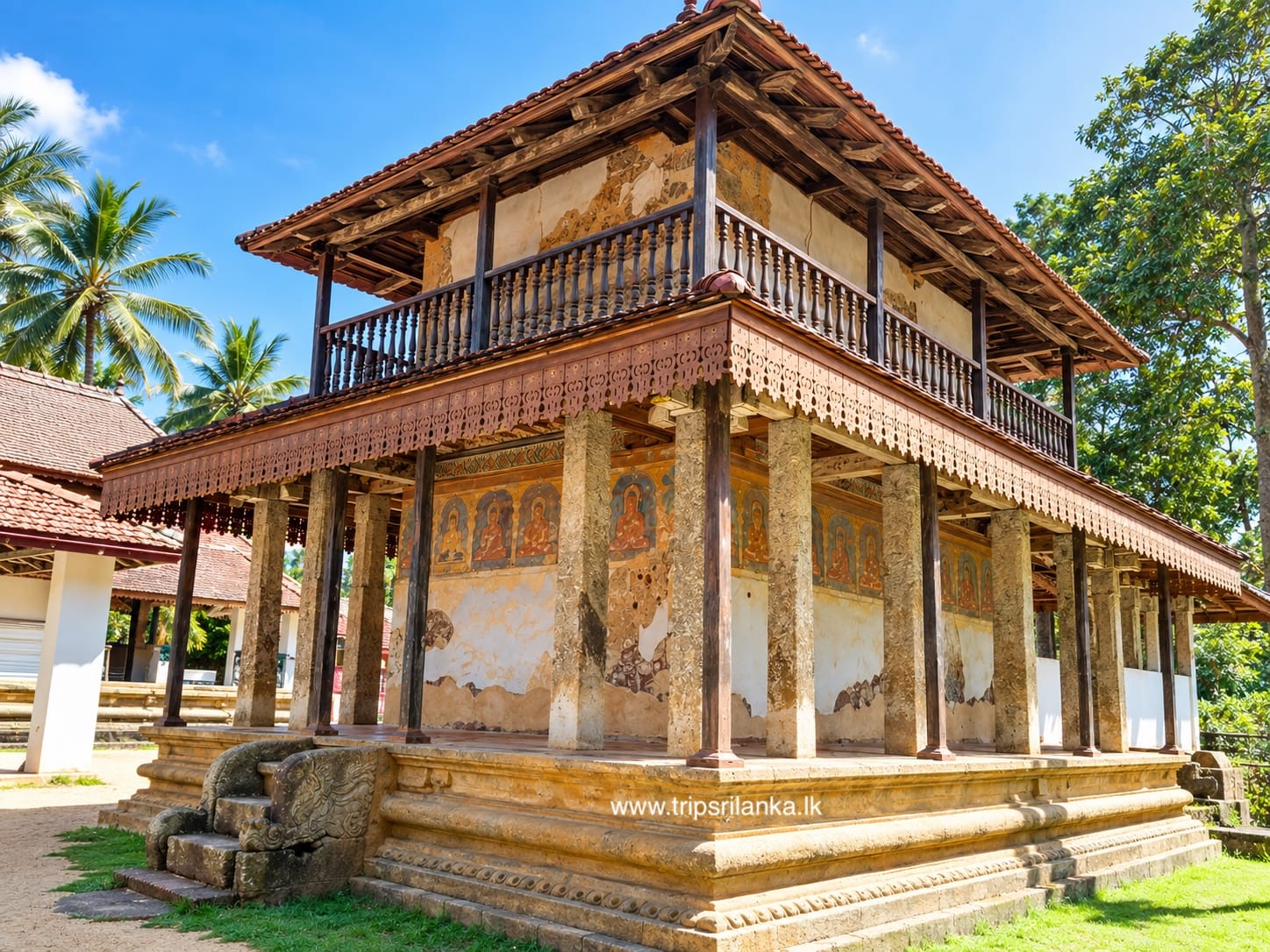
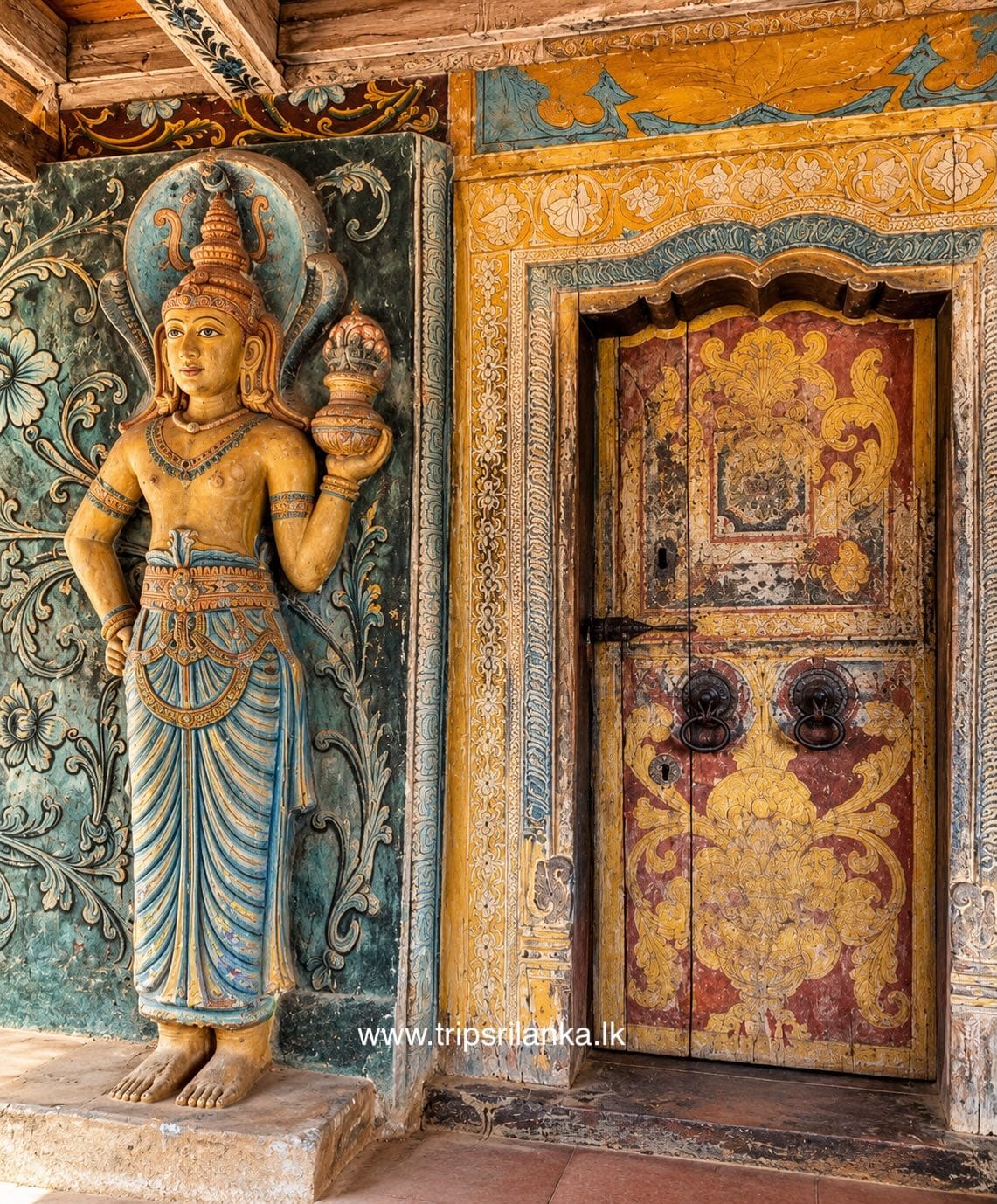
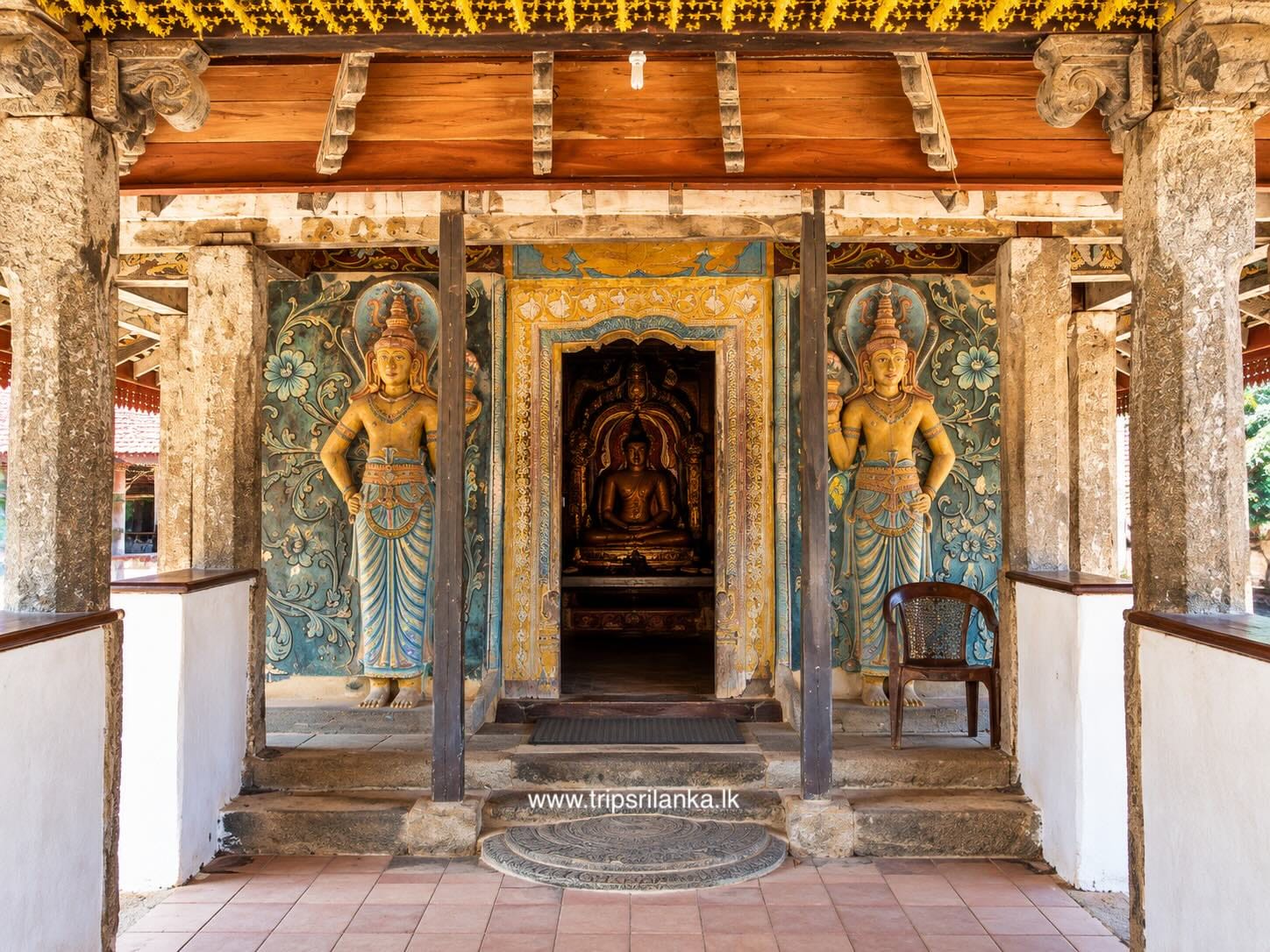
The second essential part of a Dambadeniya visit is Sri Wijayasundararama Raja Maha Viharaya, also written Vijayasundararama or Wijayasundararamaya. This is not merely an archaeological stop: it remains a Buddhist sacred place and carries the religious memory of the Dambadeniya royal period.
Sri Lanka Tourism identifies Dambadeniya Rajamaha Viharaya – Wijesundararama as one of the important Buddhist places associated with the former kingdom. Historical accounts connect Vijayabahu III with the establishment of Vijayasundararama, while later royal patronage strengthened its association with the Sacred Tooth Relic.
Why the Temple Matters
The temple helps explain why medieval capitals were more than military headquarters. In Sri Lankan kingship, political legitimacy and Buddhist guardianship were deeply connected. A capital therefore required religious institutions capable of supporting the Sangha, preserving learning and safeguarding sacred traditions.
Modern academic research from the University of Peradeniya has also examined the role of the Vijayasundararama monastic library, or Pothgul, in preserving Buddhist and intellectual traditions during the Dambadeniya period. That makes the site important not only for architecture and royal history, but also for the story of knowledge preservation.
Travellers should treat the temple as an active place of worship. Cover shoulders and knees, remove footwear where required, speak quietly and ask permission before photographing monks, worshippers or sensitive interiors.
Dambadeniya and the Sacred Tooth Relic
One of the most important reasons Dambadeniya matters in Sri Lankan history is its connection with the Sacred Tooth Relic of the Buddha. The relic was far more than a devotional object: across Sri Lankan history, custody of it became closely linked with legitimate kingship.
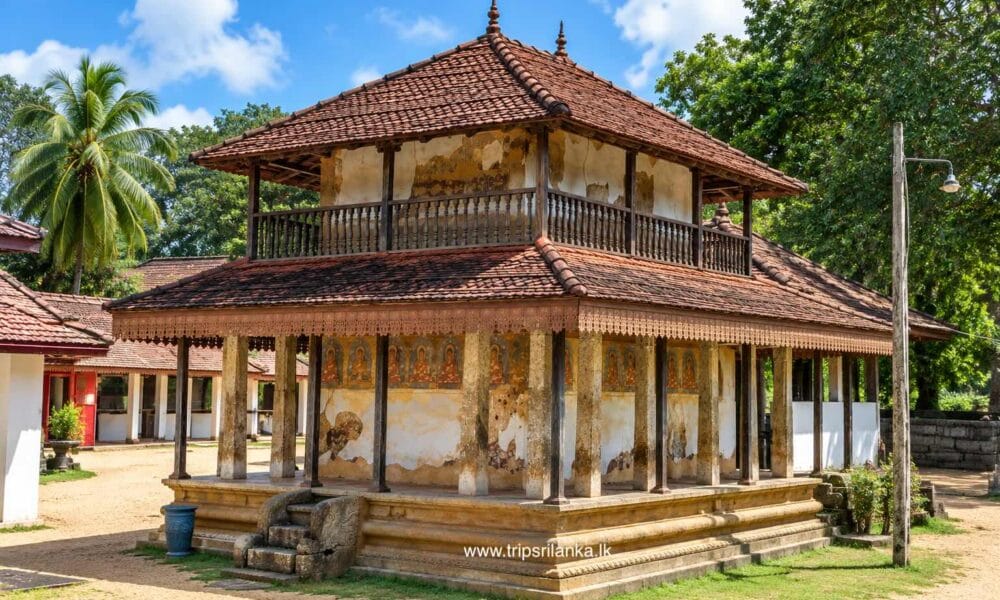
Sources describe a complicated period of protection and movement. Sri Lanka Tourism records that Vijayabahu initially kept the relic at Beligala for safety because Dambadeniya remained vulnerable to attack. Under the succeeding royal period, the relic was brought back to Dambadeniya and a two-storey Dalada Maligawa was associated with its veneration.
Why This Connection Is So Important
Understanding the Tooth Relic transforms Dambadeniya from a collection of ruins into part of a much larger national story. Royal capitals moved, but the protection of Buddhist institutions and the sacred relic remained central to sovereignty.
The Central Cultural Fund's history of the Temple of the Tooth explains the broader relationship between the relic, royal legitimacy and Sri Lanka's successive capitals.
Dambadeniya Kingdom: 5-Image Heritage Gallery
Use five original Trip Sri Lanka photographs here to strengthen both visitor experience and image SEO. Replace each placeholder URL with the corresponding WordPress Media Library image URL. The slider works with touch/swipe on mobile and numbered navigation without requiring an external JavaScript library.
What Makes Dambadeniya Different From Sigiriya and Yapahuwa?
Visitors sometimes approach every Sri Lankan rock fortress as though it were another Sigiriya. Dambadeniya deserves a different expectation. Sigiriya is famous for its monumental 5th-century palace landscape, frescoes and water gardens. Dambadeniya belongs to a much later medieval political world and survives in a more archaeological, understated form.
Yapahuwa is the closest historical comparison because it followed Dambadeniya as a fortified royal centre. Yet Yapahuwa's celebrated ornamental stairway gives it a very different visual identity. Dambadeniya is especially valuable for travellers interested in understanding the transition between kingdoms and how political geography changed after Polonnaruwa.
Medieval Capital & Living Temple
Best for understanding 13th-century kingship, the palace rock, Buddhist heritage and the movement of royal power into Sri Lanka's southwest.
Fortress & Monumental Stairway
The successor capital is famous for its dramatic defensive setting and ornate stone stairway. Pairing both sites creates a strong medieval-kingdom route.
Earlier Royal Citadel
A much earlier and more monumental site. Visit Sigiriya for a different chapter of Sri Lankan royal architecture rather than treating the three places as substitutes.
For the next stage of this medieval story, see the official Central Cultural Fund guide to Yapahuwa Rock Fortress.
Dambadeniya's Literary and Cultural Legacy
The Dambadeniya period is notable because political insecurity did not prevent cultural production. Parakramabahu II became associated with literary achievement, and the era occupies an important place in the development and preservation of Sinhala and Pali learning.
That cultural dimension makes Dambadeniya particularly interesting for travellers who want more than photographs of ruins. The site represents a kingdom trying to protect sovereignty while rebuilding religious and intellectual life. The nearby temple, monastic traditions and historical association with texts and learning are therefore part of the same story as the walls and palace foundations.
How to Visit Dambadeniya Kingdom and Palace Complex
Dambadeniya is in the Kurunegala District and can fit naturally into a private road itinerary between western Sri Lanka and the Cultural Triangle. It is particularly useful for travellers who want a heritage stop away from large tour groups.
How Long Should You Allow?
Allow roughly half a day if you want to visit both Raja Maliga Gala and Sri Wijayasundararama Raja Maha Viharaya without rushing. Travellers who enjoy archaeology, photography or Buddhist heritage may want longer.
Best Time of Day
An earlier start is generally more comfortable for the rock section because temperatures are lower. Rain can make stone and earth surfaces slippery, so the order of the visit should remain flexible during unsettled weather.
What to Wear
- Good walking shoes for the rock and uneven archaeological ground.
- Light, breathable clothing suitable for Sri Lanka's warm conditions.
- Temple-appropriate clothing covering shoulders and knees.
- Sun protection including a hat and sunscreen.
- Water for the climb, especially during warmer periods.
- A light rain layer during wet or transitional weather.
For island-wide preparation, see our Sri Lanka Packing Guide.
Best Ways to Add Dambadeniya to a Sri Lanka Itinerary
Dambadeniya becomes especially valuable when it is integrated into a route rather than treated as an isolated excursion. Because it lies within Sri Lanka's north-western interior, a private chauffeur journey can use it as a meaningful cultural stop while travelling toward other heritage regions.
Dambadeniya Heritage Stop
Travellers heading inland after arrival can use Dambadeniya as a quieter introduction to Sri Lankan royal history before continuing toward larger heritage sites.
Dambadeniya → Yapahuwa
One of the strongest combinations for history-focused travellers because the route follows the movement of royal power between successive fortified capitals.
Dambadeniya → Kurunegala Region
Combine medieval heritage with rural landscapes and selected local experiences rather than spending the entire day moving between famous monuments.
Use It as a Meaningful Stopover
Dambadeniya works well for travellers who prefer smaller heritage sites, photography, local history and flexible private touring.
Who Will Enjoy Dambadeniya Most?
The site is ideal for travellers who enjoy historical context and places that still require a little imagination. It is not a polished theme-park version of history. That is precisely its strength.
- History enthusiasts interested in Sri Lanka beyond the best-known ancient capitals.
- Photographers looking for rock landscapes, temple details and rural views.
- Buddhist heritage travellers interested in the history of the Sacred Tooth Relic and royal patronage.
- Repeat visitors who have already seen Sigiriya, Kandy and Polonnaruwa.
- Families with older children who enjoy combining a manageable climb with a real historical story.
- Private-tour travellers who value flexibility and quieter cultural sites.
Responsible Travel at Dambadeniya
Dambadeniya combines archaeology with a living Buddhist temple, so responsible behaviour matters in two different ways. At the palace rock, protect the physical remains. At the temple, respect religious practice.
- Do not climb on archaeological walls or foundations.
- Never remove stones, fragments or natural material from the heritage area.
- Dress respectfully at the temple and remove footwear where requested.
- Ask before photographing people, particularly monks and worshippers.
- Keep noise low around shrine areas and ceremonies.
- Use local services thoughtfully and avoid leaving litter on the rock or temple grounds.
Travel Beyond the Famous Landmarks
Visiting places such as Dambadeniya can distribute tourism interest beyond Sri Lanka's busiest heritage sites. The best experience comes from approaching it with curiosity rather than expecting the scale or infrastructure of Sigiriya.
Dambadeniya Kingdom and Palace Complex FAQs
What is the Dambadeniya Kingdom and Palace Complex?
It is the archaeological and religious landscape of a 13th-century Sri Lankan capital in the Kurunegala District. Key places include the fortified Raja Maliga Gala and Sri Wijayasundararama Raja Maha Viharaya.
Who made Dambadeniya a royal capital?
King Vijayabahu III is associated with establishing Dambadeniya as the capital during a period of political instability after the decline of Polonnaruwa.
What is Dambadeniya Raja Maliga Gala?
Raja Maliga Gala is the prominent fortified rock associated with Dambadeniya's royal palace complex. Archaeological remains on and around the summit preserve evidence of the medieval citadel.
Why is Sri Wijayasundararama Raja Maha Viharaya important?
The temple is closely connected with Dambadeniya's royal Buddhist history and traditions surrounding the Sacred Tooth Relic. It also represents the kingdom's religious and intellectual life.
Was the Sacred Tooth Relic kept at Dambadeniya?
Dambadeniya is an important chapter in the relic's medieval history. Historical accounts describe its protection at Beligala during part of the period and its later association with relic shrines at Dambadeniya.
How long do I need to visit Dambadeniya?
Half a day is a practical allowance for the palace rock and the temple. History enthusiasts may prefer a slower visit, especially when combining Dambadeniya with another medieval heritage site.
Is Dambadeniya worth visiting if I have already seen Sigiriya?
Yes. Dambadeniya belongs to a different historical period and tells the story of Sri Lanka's medieval shift of capitals. It is quieter, less monumental and more archaeological than Sigiriya.
Can Dambadeniya be combined with Yapahuwa?
Yes. The combination is especially meaningful because Yapahuwa succeeded Dambadeniya as a fortified royal centre, creating a strong route for travellers interested in medieval Sri Lankan history.
What should I wear at Dambadeniya?
Wear comfortable walking shoes for Maliga Gala and carry clothing that covers shoulders and knees for the Buddhist temple. Sun and rain protection are also useful.
Can Trip Sri Lanka include Dambadeniya in a private tour?
Yes. Dambadeniya can be incorporated into a tailor-made chauffeur journey, including the palace rock, Sri Wijayasundararama Raja Maha Viharaya and onward travel toward other cultural or nature destinations.
Discover the Forgotten Royal Capital of Dambadeniya
Tell us your travel dates and interests. Trip Sri Lanka can build Dambadeniya Raja Maliga Gala and Sri Wijayasundararama Raja Maha Viharaya into a private heritage journey that connects Sri Lanka's famous landmarks with the quieter places that reveal the island's deeper story.
Design My Private Sri Lanka Journey
Sri Lanka Travel Guide 2026 This Sri Lanka Travel Guide is designed to help travellers plan the perfect holiday to.
Planning a trip to paradise but only have a limited time to explore? A 7-Day Sri Lanka Itinerary might seem.
Comment Section